You can follow the stealthy footsteps of folk hero smugglers at www.smuggling.co.uk
When you think about smuggling it's normal to imagine barrels of brandy and other goods secretly being brought into the country under cover of dark. However things actually started the other way around. All trade into and out of England was free until the beginning of the 14th century when King Edward I, who needed to raise money to fund the many wars he was involved in, brought in a customs duty on the export of wool. To start with taxes were quite small but as the wars went on they went up. There was a really high demand for wool in Europe, so merchants looked for and used those ports, beaches and coves which were not attended by tax collecting excise men to ship their goods out.
Although not part of the same taxation system, tin which had been shipped from Britain with no restriction for thousands of years also became a controlled material when early in the 14th century the Duchy of Cornwall was given the right to buy all tin coming to market. All ingots had to be taken to one of the tin regions administrative towns to be tested for quality and stamped, these towns became know as Stannary Towns. Naturally this had a controlling effect on the price because the Duchy didn't need to negotiate. Not wanting to be controlled in this way many traders carried on as before; and regular cargos of undeclared ingots were shipped out of the country hidden under other goods, often barrels of pilchards. As a result the laws increased and became more sever.
Until 1421 there were no real means in place to ensure that excise payments were made, as a result 'free traders,' as those avoiding the tax were known became mainstream. As more goods became liable to customs duty the authorities began to take steps to ensure duty was paid, and the ongoing drama of smugglers verses the excise men began to take shape. By the 16th century efforts were made to deter smugglers, and by the 17th century the Board of Customs had appointed officers to certain ports and the trading of taxed goods was restricted to these manned ports.
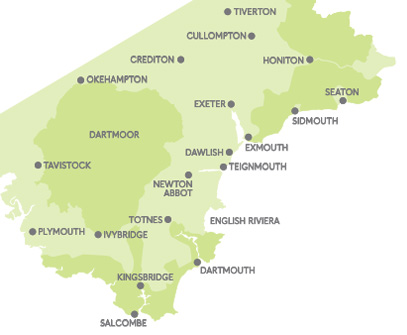
In South Devon officers were based at Plymouth, Salcombe and Dartmouth with a detachment of Dragoons at Kingsbridge. Even then the smugglers still had the upper hand. Many of the officers were on horseback to help them cover the large distances between postings. However a lot of the coastal path is unsuitable for horses, so many patrols were still made on foot. This meant it could take from an hour to three hours for a message to get from say Prawle Point to the Dragoons in Kingsbridge, by which time the smugglers would be long gone! Many of the public also had a vested interest in smuggling, and saw no reason to support a system that would mean they would have to pay much more for things, so for a long time increased regulation served only to increase the smugglers determination. In 1809 the Preventive Water Guard was formed and things looked up for the customs men. Watch houses were built around the coast, one about a mile east of Prawle Point. There were also boats that patrolled stretches of the coast.
From Elizabethan times to the middle of the 19th century smuggling could be described as a service. By today's standards of living there was real poverty amongst the peasants and even some of the lower gentry struggled to get by. Luxuries items such as tobacco, tea, and sprits if bought legally were out of their reach, largely because the price had to reflect the high import taxes levied. Smuggling was about providing the luxuries of life at a price that ordinary folk could afford, and making a hefty profit into the bargain. Even if only one in three trips was successful financially it was all worthwhile.
By 1597 according to G.M Trevelyan 'the new American weed (tobacco) was being smuggled into the creeks of the West Country on a large scale...in open defiance of the custom house officers'. In 1784 William Pitt calculated that 13 million pounds worth of tea was drunk in the Kingdom, but that only 5 and a half million pounds worth of that had paid the tax. Again according to Trevelyan ' smuggling added interest to people's lives' and was regarded as innocently, 'Parson Woodforde, a truly good and well respected man wrote on the 29th of March 1777 "Andrews the smuggler bought me this night about 11 o'clock a bag of Hyson tea, 6 pounds in weight. He frightened me just a little by whistling under the parlour window just as we were going to bed. I gave him some Geneva and paid him for the tea 10/6 per pound." Andrews the smuggler is referred to in the same way that we may say Andrews the grocer, or the coalman.
Smuggling was a highly organised and profitable operation sometimes involving whole communities, but always involving large numbers of people. There were many roles to be played including boatsmen frequently local fishermen, lookouts, the transportation group to supervise the horses or mules with muffled hooves, sometimes there would be more than a hundred animals involved who along with the men and women supervising them would hardly have been unobtrusive! Another gang gathered on the beach to do the carrying, if the cargo was brandy each man would carry two barrels up the difficult cliff tracks to the waiting horses, if the cargo was more substantial it could be hauled up the cliff side by rope. Goods were then taken to a safe place, often the cellar of an inn, or a house with a false wall in the attic. If the house belonged to someone above suspicion so much the better. Well to do local citizens, sometimes even the local magistrate, would act as the financier for the operation getting involved only behind the scenes and interested in making a nice profit! Local church towers were another favourite hiding place for the goods, sometimes with the knowledge of the clergy, sometimes without. One South Devon church, possibly Stoke Fleming is said to have had a false ceiling above the bell ringing chamber creating a space to hide contraband goods!
In coastal villages some houses and cottages still have small pointed windows in which a candle would be lit if the revenue men were around. When warnings were given boats would either stand off or take shelter in a nearby cove until the all clear was given. As immortalised in Rudyard Kipling's 'The Smuggler's Song' locals whether actively involved in smuggling or not, knew it was wise to keep quiet about anything they saw "....Five and twenty ponies, trotting through the dark- Brandy for the parson, 'baccy for the Clerk; laces for the lady, letters for a spy, and watch the wall my darling while the Gentlemen go by!..."
Men who did the hands on smuggling work and transported the goods inland could earn more in one night than in a week of legitimate work. A receiver of smuggled goods could be sentenced to three months in prison and anyone caught smuggling could be transported for seven years! These strict punishments served only to make smugglers take greater care and increase the level of smuggling activity. The stories of compliant vicars and friendly magistrates may sometimes be exaggerated although obtaining convictions with local juries was near impossible at times.
Throughout the coastal areas of South Devon there are many villages, pubs, churches, and coves that lay claim to an involvement with smuggling, here are just a few.
The village of East Prawle is far enough from the revenue men in Salcombe and Dartmouth, and the Dragoons in Kingsbridge to give any smugglers a bit of breathing space to dispose of or hide any goods and escape if the alarm was raised and there are many stories about the Pig's Nose pub providing both a storage and disposal service for smugglers.
East Portlemouth church tower is known to have been a hiding place for smuggled goods. It's likely that they were landed at Seacombe Sand with its Abraham's Cave possibly named after a long gone smuggler. East Portlemouth church is much older than most of the houses in the village, a bit of a puzzle until you discover that the village at one time had two pubs both of which were said to be a hot bed of smuggling. The villagers were earning so much money from smuggling that they refused to work for the Estate of the Duke and Duchess of Cleveland who owned the village and surrounding lands. So in 1879 the Duke ordered most of the villagers to be evicted and demolished their houses. So today most of the houses we see were built in the late 19th and early 20th centuries.
Hope Cove is remote today, but in the 18th and 19th centuries the road from Malborough to Hope Cove was in such bad condition centuries it was dangerous to travel. It's been suggested that the majority of Hope Cove's fishermen were involved in smuggling, which would have meant that their families and the rest of the community would also have been involved carrying out the other necessary roles. It's one of the few places where the names of local smugglers are recorded, two brothers Richard and Philip Kingcup were the local smuggling ringleaders, Philip drowned at sea the details of his death are not recorded. Legend has it that there is a cottage near Shippen Rock which had a trap door leading to a tunnel, which lead to a cave on the beach. The landward side of the tunnel collapsed some time ago but until fairly recently there was a passage leading from the entrance of the cave some thirty of forty yards, perhaps suggesting that there was some truth in the legend.
Thurlestone was another of the churches used to hide booty, as many as fifty kegs of brandy used to be stored on the roof of the porch. Most of the time the rector knew about the goods and traditionally took one keg as payment, however when the Reverend Peregrine Ilbert was appointed in 1839 he was busy preaching sermons of damnation against the smugglers unaware that the porch was still providing a hiding place for barrels of brandy and when he was offered brandy in payment he indignantly refused it.
Bantham was the favourite landing place and home of the notorious smuggler Nat Cleverly. He owned a large fishing boat and made regular trips to Roscoff. Profits from the goods he smuggled made him wealthy and influential. The revenue men were determined to catch him and made things so difficult for Nat that at one point he gave himself up. The magistrate that he appeared before happened to be one of his good customers and he was found not guilty and released. He was back preparing for another run the next day. Stories suggest that most of Bantham's community were involved in smuggling and most cottages had a secret hiding place. Payments made to those bringing goods ashore and hiding them meant that smugglers like Nat Cleverly could be assured of the community's loyalty.
This area was also the operating ground of one of the most notorious smugglers Tom Crocker. Tom based himself on Burgh Island off Bigbury. Very little is really known about him but there are lots of stories, no doubt based on truth, which have been passed down generation to generation. He's said to have used the Pilchard Inn as a retreat and storage place. Tom Crocker's Cave is on the western coast of the island and at some time there was a tunnel that lead from this cave to the cellar of the Pilchard Inn, but both ends are now bricked up. After a lengthy career Tom was apparently shot by the revenue men on the 14th August in the porch of the Pilchard Inn but no-one seems to know in which year.
You can follow the stealthy footsteps of these folk hero smugglers at www.smuggling.co.uk